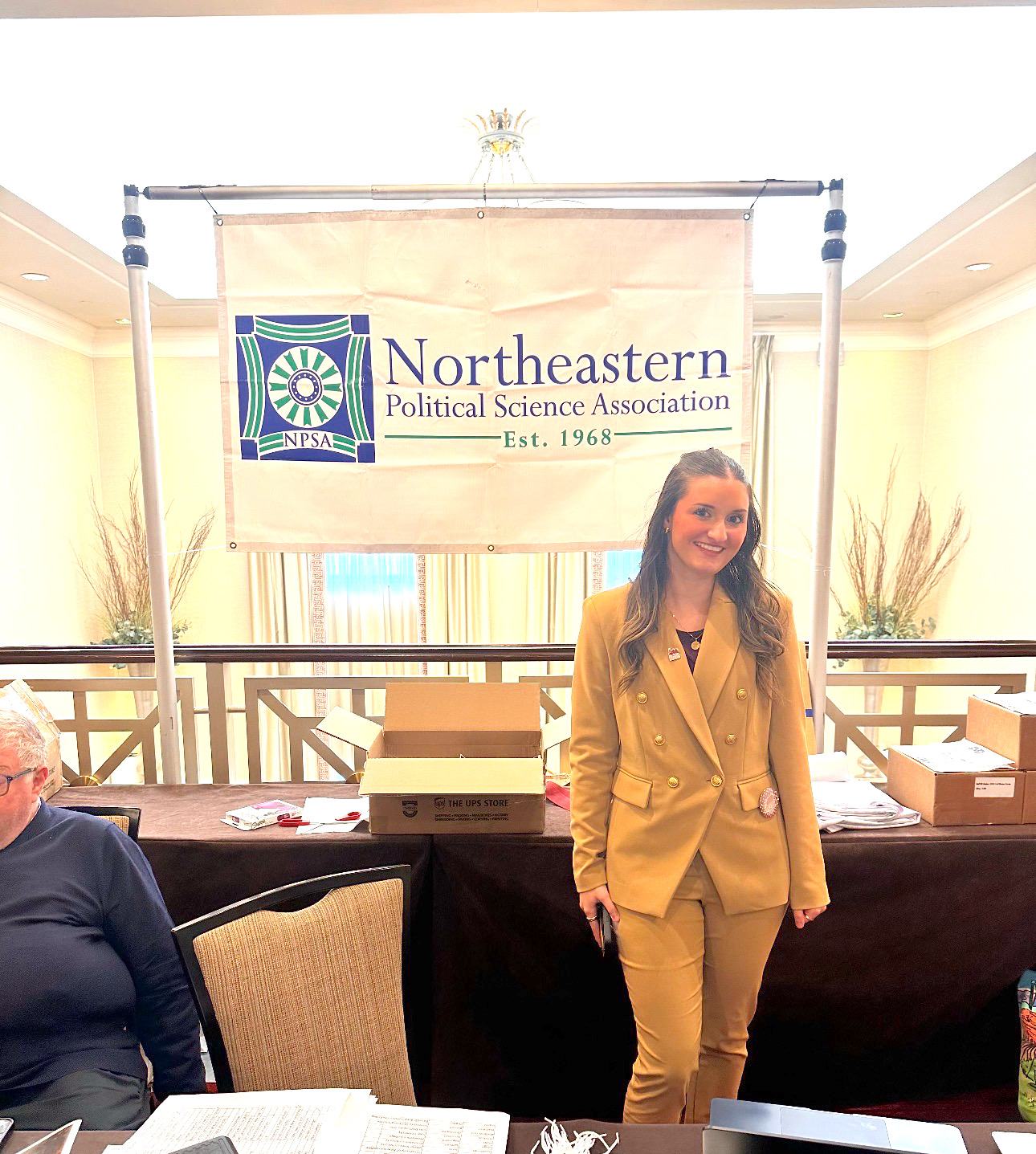
Political Science Major, Saige Berthelot, Presents At 58th Annual Northeastern Political Science Association Meeting


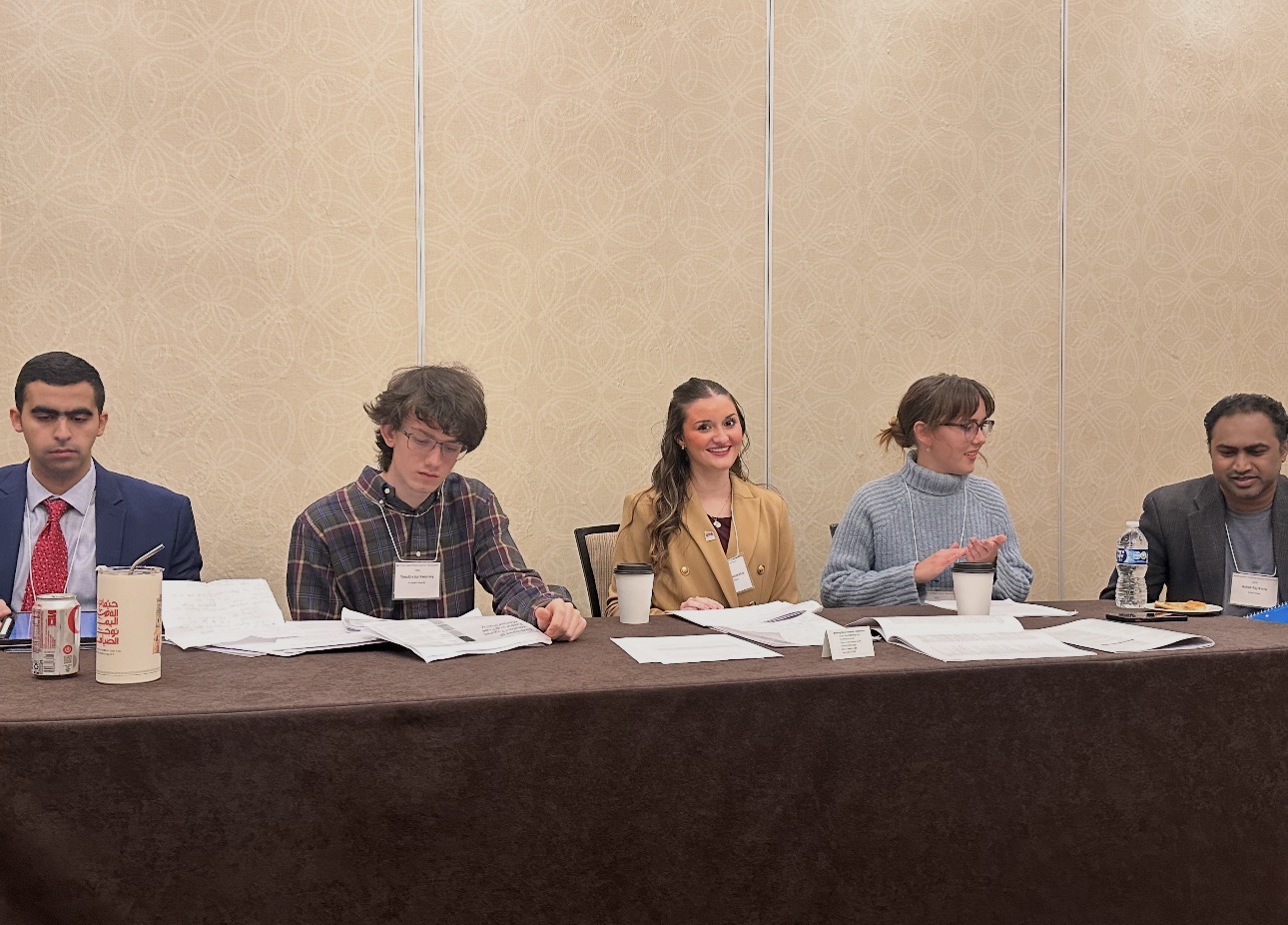
Second-year Political Science and Philosophy student Saige Berthelot presented at the 58th Annual Northeastern Political Science Association Meeting in Rhode Island on November 14th, 2026. Her paper was featured in the Undergraduate Panel, "Philosophical Approaches to Modern Political Issues." Her paper was titled "Platonic Parallels: Closing the Gap Between Civic Statistics and Philosophy." During the panel, she was able to present her paper, get in-depth feedback from a field specialist, and answer questions from the attendees. Saige also had the opportunity to network with PhD students and professors doing similar work in ancient political theory, including Harvard, Brown, Yale, the Hudson Institute in DC, UT Austin, and Boston College, to name a few. She was able to meet the editors of the Polity Journal, one of the leading Political Science Journals in the field. As a member of Pi Sigma Alpha, she was able to network with members representing the honors society at the conference. She describes her experience as deeply enriching, as she was able to learn from experts in her field while also contributing her knowledge from her studies at Loyola. What she loved most was that the dialogue didn't stop when the panels ended. Instead, the discussions carried on afterward—turning into truly platonic conversations with the scholars who know Plato best.
Saige's research project examines the relationship between key Platonic doctrines, particularly the Theory of Forms and the Allegory of the Cave, and contemporary patterns of civic engagement in the United States. Drawing on the political philosophy of Plato, the study investigates how classical theoretical frameworks can illuminate present-day democratic behavior, especially among the emerging generation of voters. The methodology integrates peer-reviewed scholarly research, a Qualtrics survey administered to students at Loyola University New Orleans, and close textual analysis of Plato’s work, especially The Republic. This interdisciplinary approach combines philosophical interpretation with empirical evaluation in order to assess declining positive attitudes toward politics and decreasing levels of political participation. Statistical findings derived from survey data are interpreted through a Platonic lens to explore whether contemporary political disengagement reflects conditions analogous to those described in Plato’s account of civic misunderstanding. By applying Platonic theory to current voting behavior and democratic participation, this study demonstrates that classical political philosophy provides a rigorous and enduring framework for analyzing contemporary democratic phenomena and contributes to ongoing conversations about the philosophical foundations of civic responsibility.