
Loyola University New Orleans Convenes AI Braintrust to Help Shape the Future of Teaching and Learning
Invitation-only AI Braintrust brought together leaders from technology, business and higher education to help shape Loyola’s next era of teaching, learning and innovation


As artificial intelligence rapidly reshapes the way people learn, work and lead, Loyola University New Orleans is taking a proactive approach to one of the most consequential questions facing higher education: How should universities prepare students not simply to use artificial intelligence, but to thrive in an AI-driven world?
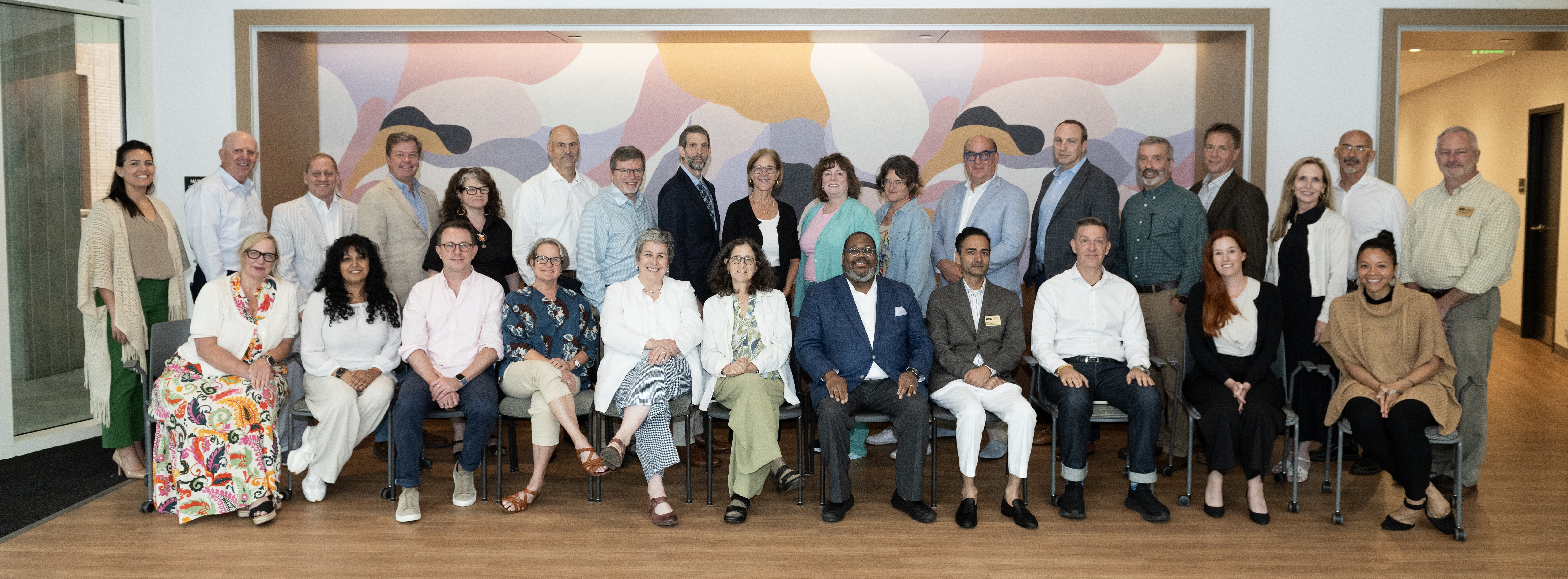
Last Friday, Loyola convened an invitation-only AI Braintrust Summit, bringing together leaders with experience across some of the world’s most influential technology, financial, healthcare and professional services organizations, including Amazon, American Express, Coopersmith Law + Strategy, Microsoft, Moderna, Telemetry and UBS. Diana Pallais, Chair of the Academic Affairs Committee of Loyola’s Board of Trustees, spearheaded the initiative, partnering with Loyola’s academic and administrative leadership team.
The summit marked an important step in Loyola’s broader effort to position the university at the forefront of a rapidly changing higher education landscape and to develop a distinctly Jesuit approach to artificial intelligence, one that pairs technological fluency with ethics, critical thinking, adaptability and a commitment to human flourishing. Pope Leo’s recent encyclical on AI, Magnifica Humanitas, helped to frame the conversations.
“Preparing students for an AI-driven world requires more than teaching them how to use new technologies,” said Loyola University New Orleans President Xavier A. Cole. “It requires helping them think critically about how those technologies should be used, whom they should serve and how innovation can advance human dignity and the common good. That is precisely the kind of work a Jesuit university is called to lead.”
Rather than approaching AI as a single technology or classroom tool, participants examined how it is transforming the skills graduates need, the ways institutions operate and the expectations employers will have of the next generation of professionals.
The Braintrust Summit was designed not as a standalone conversation, but as an early step in shaping a larger institutional strategy for Loyola’s AI-ready future, starting with a deeper understanding of how the world of work is changing as a result of AI. Understanding that context is critical for the formation of Loyola students to help prepare them to meet the new challenge.
Building on the summit, Loyola is developing a multi-year roadmap for AI readiness that begins with strong institutional foundations, including governance, technology infrastructure and AI learning opportunities for faculty and staff. Future phases envision deeper integration of AI literacy into the curriculum, new educational credentials and partnerships that could extend Loyola’s expertise to businesses and organizations throughout the region.
“The Braintrust brought valuable perspectives from across industries into conversation with our academic leaders,” said Loyola University New Orleans Provost Thomas Chambers. “Those insights will help us determine how best to support our faculty, strengthen our curriculum and ensure that Loyola graduates are prepared to use AI thoughtfully, responsibly and effectively.”
Ultimately, the university’s ambition is to create an environment in which every Loyola graduate leaves prepared to navigate an AI-enabled economy with both technological confidence, the right mindset to succeed in a changing context, and a strong ethical compass.
The work also extends beyond the classroom. Loyola is examining the infrastructure, policies and institutional capabilities necessary to use AI responsibly across the university, while exploring opportunities to become a regional resource for businesses and organizations adapting to technological change.
For Loyola, becoming an AI-ready institution does not mean pursuing technology for technology’s sake.
It means asking the questions that have long defined a Jesuit education: How should knowledge be used? Who benefits from innovation? What responsibilities accompany technological power? And how can new tools be harnessed in service of people and communities? That Jesuit formation gives Loyola graduates a distinctive foundation for an AI-shaped world, cultivating the adaptability, discernment and reflective habits they will need to experiment thoughtfully, lead with purpose and continue growing amid change.
By bringing together perspectives from industry, academia and the university community, Loyola is working to help shape the future rather than simply respond to it.
To learn more about AI at Loyola University New Orleans, visit https://www.loyno.edu/academics/artificial-intelligence-loyola.